
Discover 64 cup rice cooker recipes inspired by world cuisine. Cook global flavors at scale with easy, delicious, and big-batch meal ideas.
As an Amazon Associate I earn from qualifying purchases.
Cooking for a large group can be both exciting and intimidating, especially when you want to serve flavorful dishes inspired by cuisines from around the world. That’s where 64 cup rice cooker recipes come in. These oversized appliances are perfect for scaling up meals without sacrificing taste, texture, or presentation. At Expert Reviews Best Rice Cooker, we’ve seen how these giant cookers transform family gatherings, weddings, corporate events, and cultural celebrations into seamless dining experiences. With the right approach, you can explore global culinary traditions while using your rice cooker to its full potential. Whether you’re experimenting with biryani, coconut rice, Japanese bowls, or comforting congee, there’s no shortage of rice cooker recipes that can be scaled to feed an entire community.
———
Table of Contents
———
…
The Power of Large-Scale Cooking
Feeding a crowd is not just about quantity; it’s about maintaining quality and ensuring every portion is as delicious as the first. A 64 cup rice cooker gives you the power to prepare international recipes at scale while locking in flavor and moisture. Imagine preparing fragrant Indian biryani for 80 people, creamy Thai coconut rice for a wedding buffet, or Japanese donburi bowls for a large lunch service—all with the press of a button. These cookers are designed to manage heat distribution and timing, ensuring your dishes cook evenly regardless of size.
In this article, we’ll take you on a culinary journey through different cultures, offering inspiration for 64 cup rice cooker recipes that can turn ordinary meals into global feasts. You’ll learn not only about the ingredients and flavors but also about tips to scale up without compromising authenticity.
Why Choose Global Cuisine for Your 64 Cup Rice Cooker Recipes
- Cultural Connection: Cooking world cuisines introduces variety and teaches guests about different traditions.
- Versatility: From grains to curries, broths to stews, a rice cooker can handle a wide array of dishes.
- Consistency at Scale: Cooking in large batches can lead to uneven results with stovetops or ovens. A 64-cup cooker ensures even cooking.
- Economical & Efficient: Rice and grain-based dishes stretch budgets while still delivering taste.
By exploring recipes from India, Thailand, China, Japan, the Middle East, and beyond, you’ll discover how this one appliance can serve as the centerpiece of multicultural feasts.
Indian Inspiration: Biryani at Scale
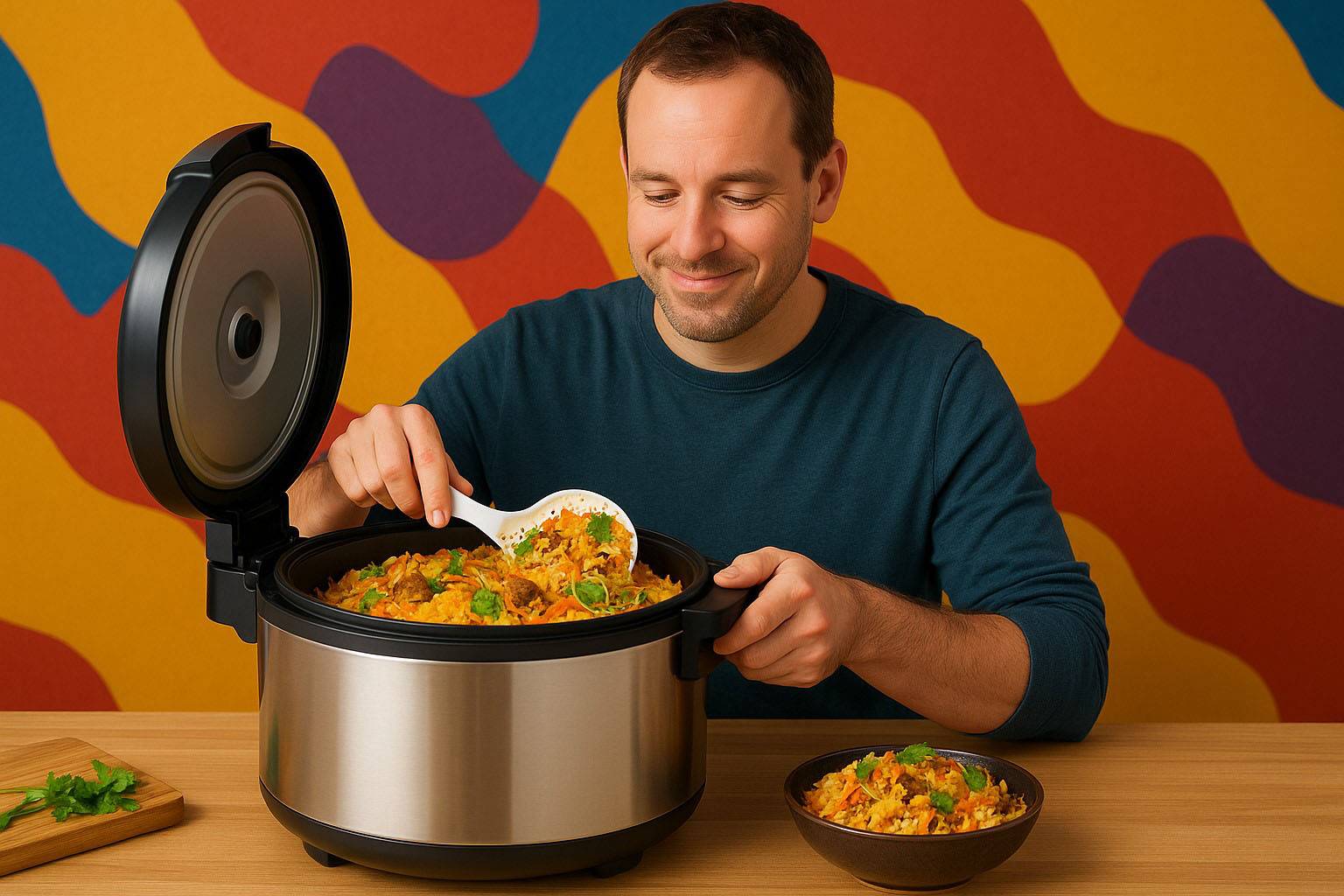
Biryani is a dish synonymous with celebration. Fragrant rice, marinated meat, caramelized onions, and aromatic spices combine into a one-pot wonder. Cooking biryani in a 64 cup rice cooker allows you to serve up to 100 portions without standing over a stove for hours.
Key Tips for Scaling Up Biryani:
- Layer Ingredients Properly: Start with marinated proteins (chicken, lamb, or vegetables), followed by semi-cooked basmati rice.
- Balance Spices: Scale spices gradually—over-spicing in large batches can overwhelm the dish.
- Moisture Control: Add yogurt or a touch of ghee to maintain moisture through steaming.
- Garnish Generously: Fried onions, fresh cilantro, and boiled eggs add authenticity.
Biryani made in bulk not only tastes great but also holds well for long buffets, making it perfect for weddings or festivals.
Thai Comfort: Coconut Rice for Banquets
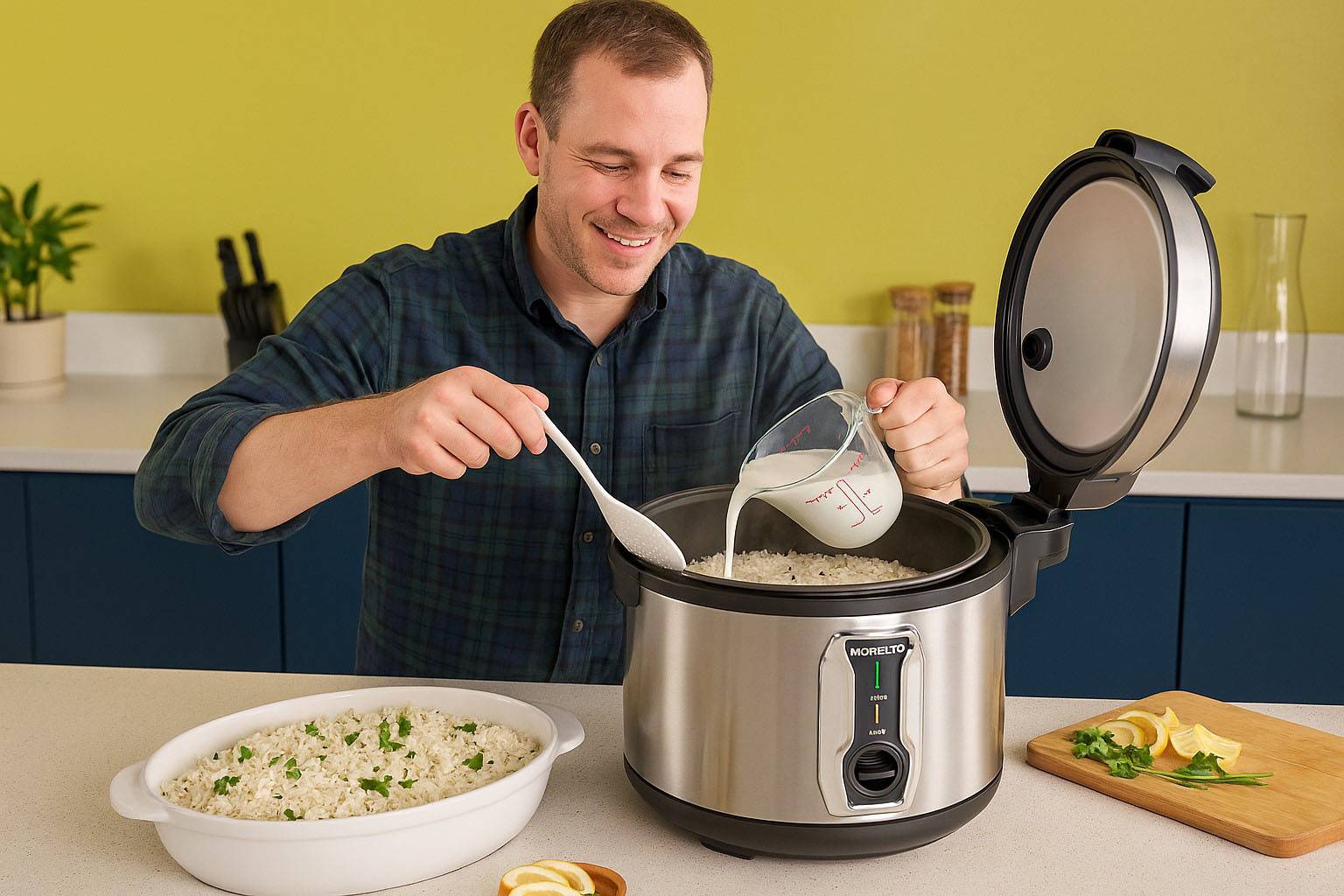
Coconut rice, with its creamy texture and subtle sweetness, is a Thai-inspired favorite that pairs well with curries, grilled meats, or stir-fried vegetables. In a 64 cup rice cooker, coconut rice can be scaled easily while retaining its delicate balance.
Coconut Rice Essentials:
- Rice Choice: Jasmine rice offers the best aroma and texture.
- Coconut Milk: Use a mix of coconut milk and water for balance—too much milk leads to sogginess.
- Seasoning: Add a pinch of salt and sugar to highlight coconut’s natural sweetness.
- Pairing Ideas: Serve with Thai green curry, peanut satay skewers, or mango slices for dessert.
At large events, coconut rice serves as a versatile base dish that appeals to both adventurous eaters and those who prefer milder flavors.
Chinese Tradition: Congee for Comfort
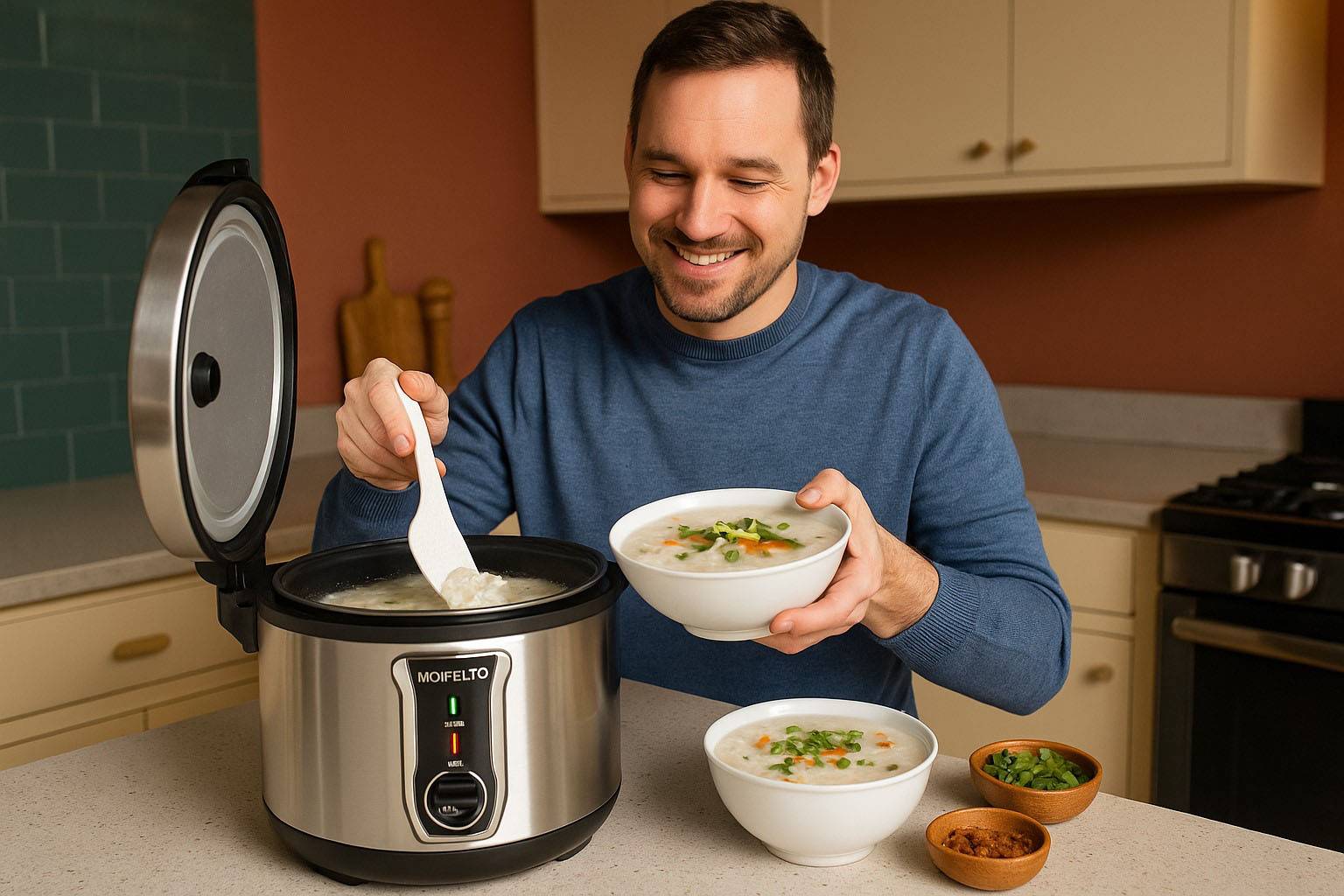
Congee, or rice porridge, is a staple across East Asia, particularly in China. It’s versatile, comforting, and perfect for breakfast gatherings, health-focused events, or community meals.
Large-Scale Congee Cooking:
- Water Ratio: Use a higher water-to-rice ratio for smooth consistency.
- Slow Simmer: Rice cookers maintain consistent low heat, perfect for hours of simmering.
- Flavor Options: Add chicken, pork, fish, or mushrooms for savory versions; or sweeten with red beans or dried fruit.
- Toppings: Scallions, soy sauce, sesame oil, and crispy shallots offer variety for large groups.
Congee is also a fantastic make-ahead option, staying warm in a rice cooker for hours without losing flavor.
Japanese Favorites: Rice Bowls (Donburi)
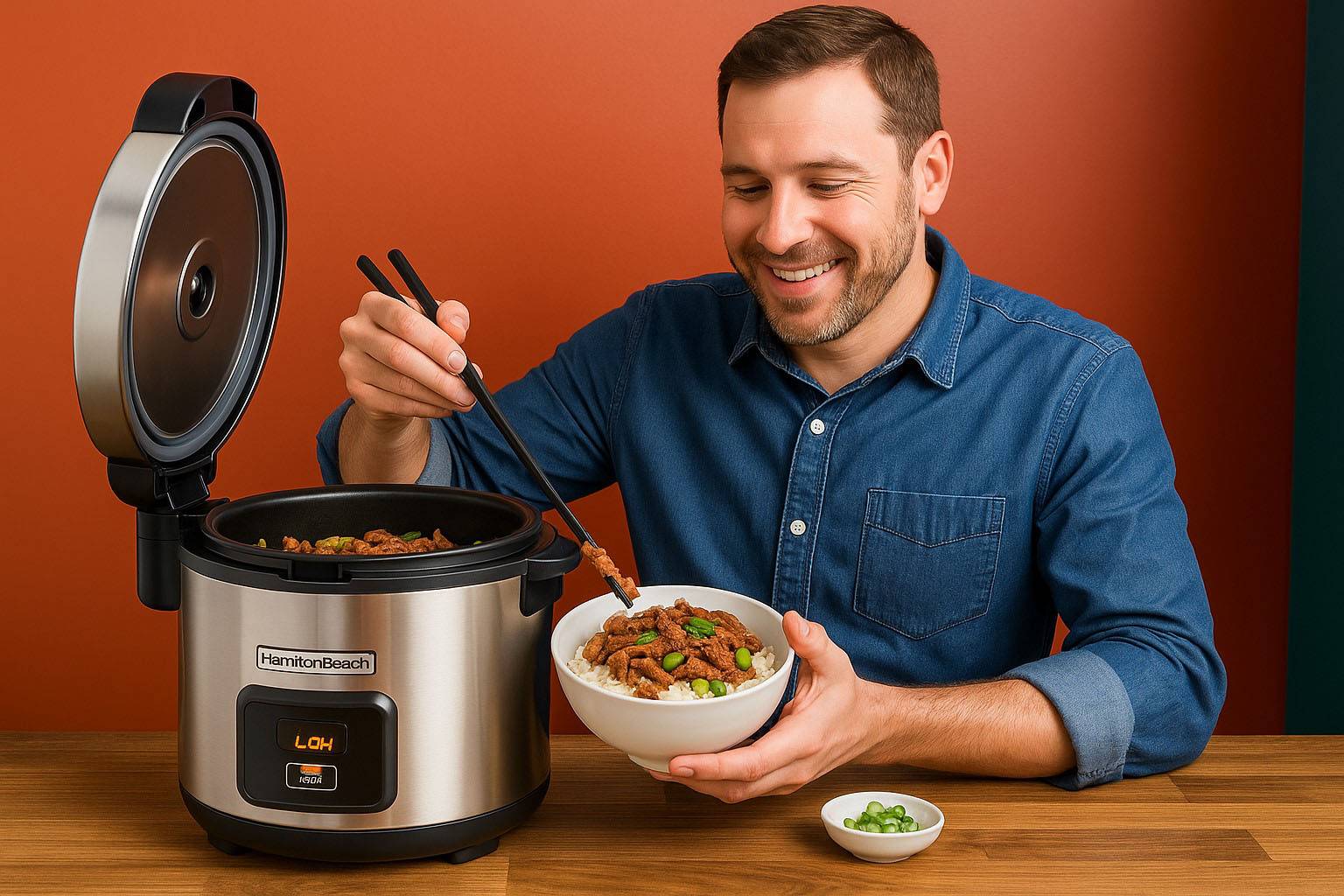
Japan’s donburi culture transforms simple rice bowls into complete meals. From teriyaki chicken to katsudon (pork cutlet bowls), these dishes rely on perfectly cooked rice as the foundation.
Donburi in a 64 Cup Rice Cooker:
- Base: Cook short-grain Japanese rice for the right stickiness.
- Proteins: Prepare toppings separately (beef, chicken, tofu).
- Assembly: Serve rice from the cooker, then let guests customize their bowls with toppings.
- Sauces: Soy sauce-based broths, teriyaki glaze, or miso dressing elevate the dish.
For large-scale events, creating a “donburi bar” lets each guest design their own bowl, ensuring variety without extra workload.
Middle Eastern Influence: Spiced Pilaf
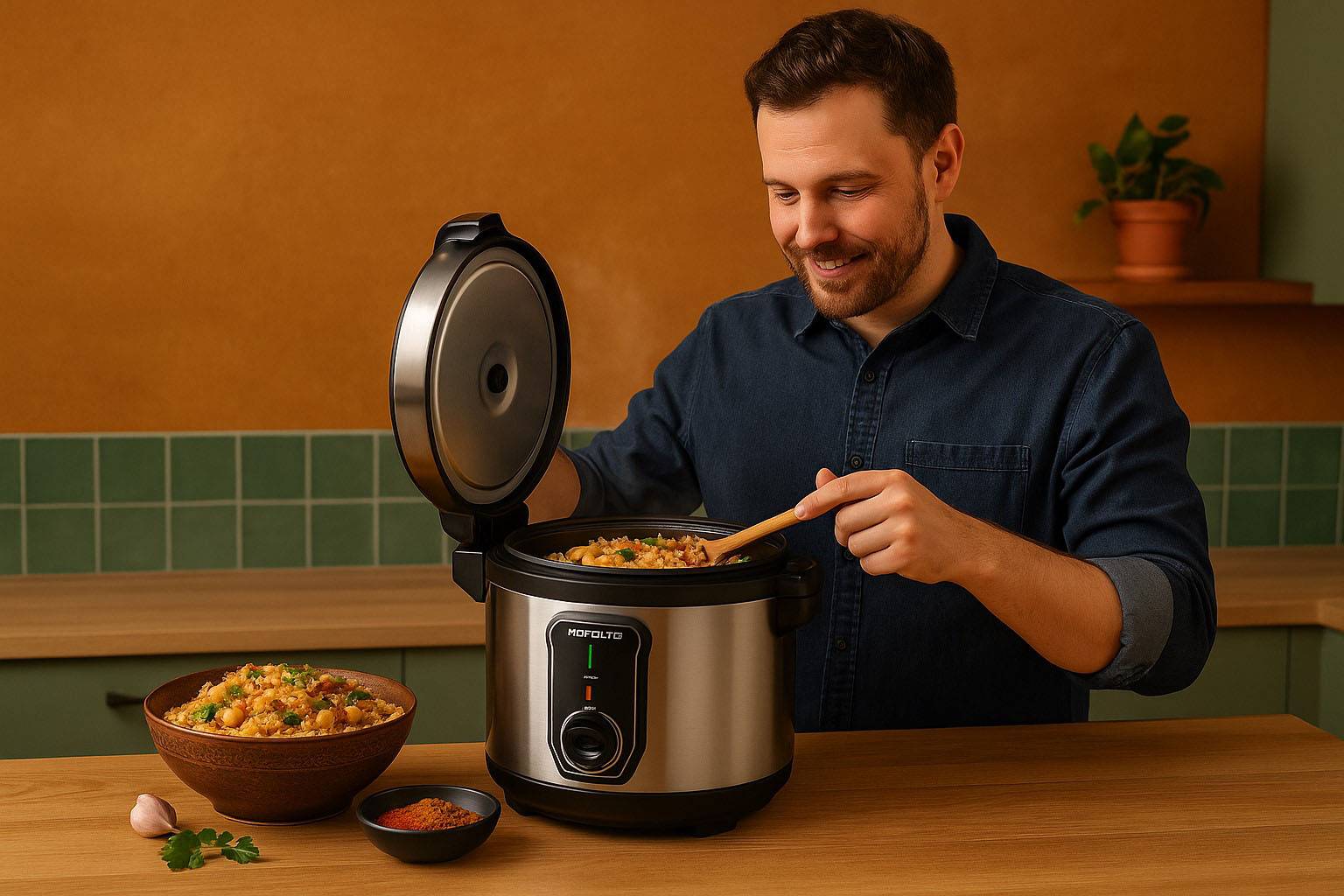
From Persian saffron rice to Turkish pilaf, Middle Eastern flavors bring warmth and richness to any table.
Scaling Middle Eastern Pilaf:
- Spices: Saffron, cinnamon, cardamom, and cloves provide aroma.
- Add-Ins: Nuts, raisins, and chickpeas add depth and texture.
- Proteins: Lamb, chicken, or fish can be layered in for heartiness.
- Serving Tip: Pair with flatbreads, hummus, and grilled vegetables.
Pilaf made in a 64-cup cooker becomes the centerpiece of a Mediterranean feast, both visually and gastronomically.
Latin American Delight: Arroz con Pollo
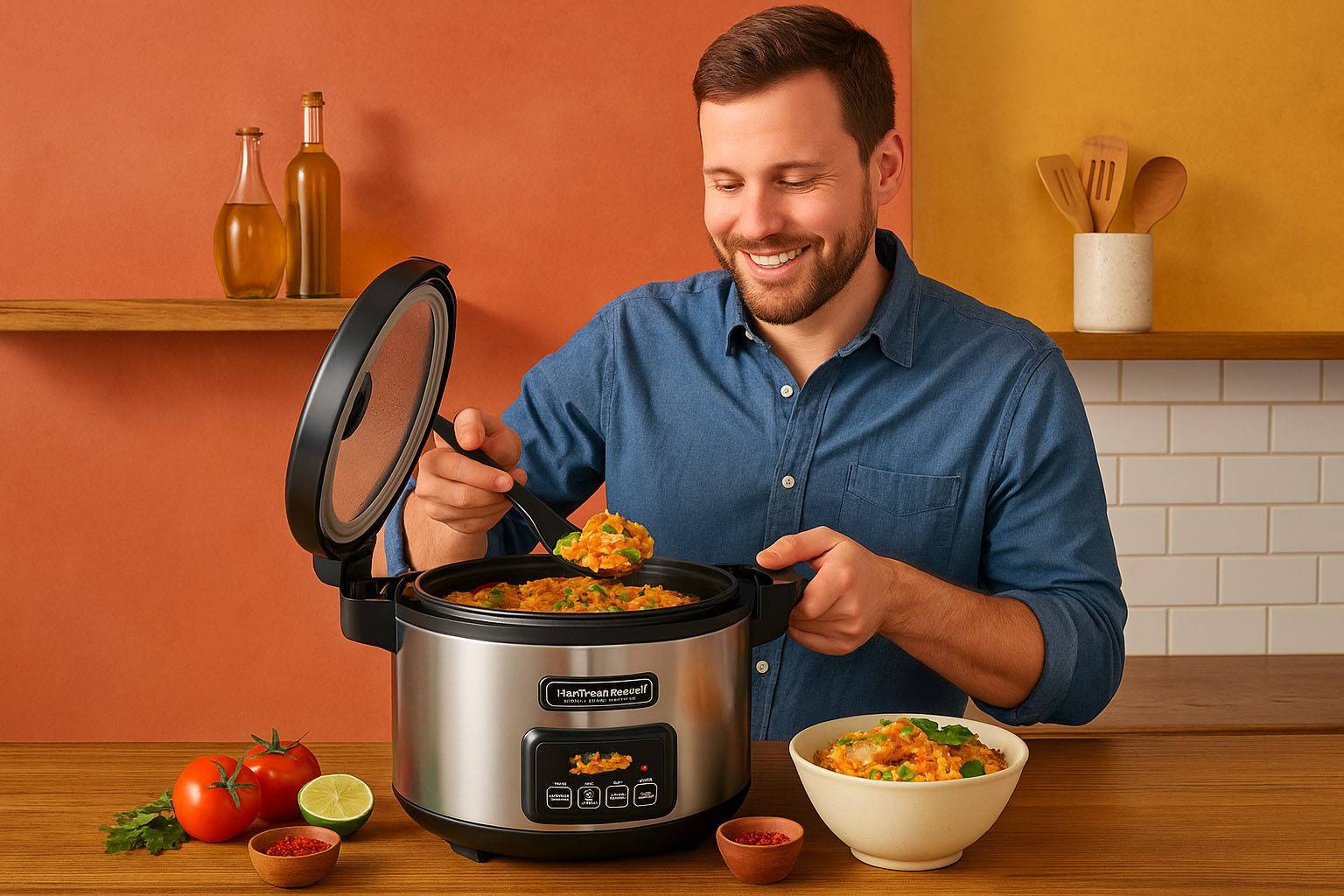
Arroz con Pollo (chicken with rice) is beloved across Latin America, and it’s ideal for bulk cooking.
Big-Batch Preparation:
- Rice Choice: Medium-grain works best.
- Spices: Saffron or annatto gives vibrant color.
- Veggies: Peas, peppers, and carrots add freshness.
- Chicken Prep: Pre-browned chicken pieces lock in flavor before layering with rice.
This dish is hearty, affordable, and universally appealing at group events.
African Flavors: Jollof Rice
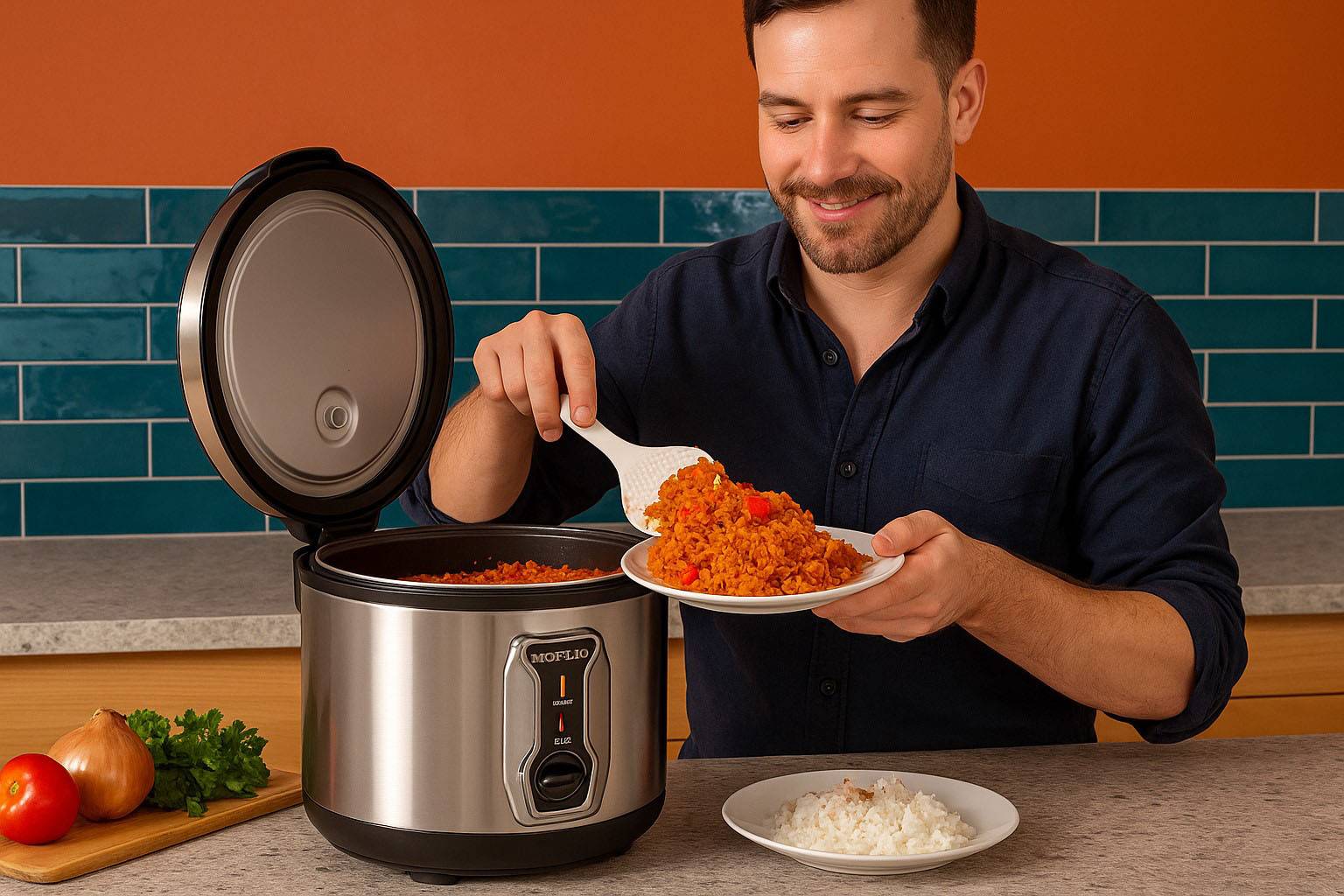
Jollof rice is a West African party essential, often cooked in massive pots for celebrations. A 64 cup rice cooker replicates the smoky, spicy flavors with less hassle.
Scaling Jollof:
- Tomato Base: Blend tomatoes, onions, and peppers for the sauce.
- Seasoning: Scotch bonnet peppers and curry powder bring heat.
- Proteins: Chicken, beef, or seafood can be mixed in.
- Texture Tip: Keep stirring occasionally to avoid burning at the bottom.
This vibrant dish is guaranteed to steal the spotlight at any communal meal.
Tips for Scaling Up Global Recipes
- Test in Smaller Batches First: Perfect seasoning before multiplying.
- Measure Liquids Carefully: Excess water ruins texture at scale.
- Use Garnishes Liberally: Fresh herbs, sauces, and toppings enhance visual appeal.
- Plan Serving Logistics: Have ladles, trays, or portion cups ready.
- Keep Warm Function: Rice cookers maintain food safety and flavor during long events.
Frequently Asked Questions (FAQ’s)
Question: How many people can a 64-cup cooker feed?
Answer: It depends on whether rice is a side or a main:
Side portion (≈¾ cup cooked / 150–180 g): ~80–90 servings
Main portion (≈1½ cups cooked / 300–360 g): ~40–45 servings
For mixed dishes (e.g., biryani, arroz con pollo) with protein/veg, plan ~1 cup per guest, so ~60–65 servings.
Question: Does “64 cups” mean cooked or uncooked rice?
Answer: Commercial cookers usually label cooked capacity. Many “64-cup” models hold ~32 cups uncooked to yield ~64 cups cooked. Because cup standards vary (180 mL “rice cup” vs 240 mL US cup), weighing is best practice. If your recipe depends on precision, weigh dry rice (see #3).
Question: What’s a reliable way to scale seasoning for huge batches?
Answer: Use percentages by weight (baker’s percentages):
Salt: 1.2–1.8% of dry rice weight (start 1.4%)
Oil/Ghee: 2–3% (pilaf, biryani)
Aromatics (garlic/ginger/onion): 5–10% combined
This method scales perfectly no matter which “cup” you own.
Question: Should I rinse or soak rice for big batches?
Answer: Yes. Rinse until water runs mostly clear to remove surface starch (prevents gumminess). Soak 20–30 minutes for basmati/jasmine; 45–60 minutes for brown. Soaking shortens cook time and evens hydration—critical at scale.
Question: Water (or liquid) ratios for different rice types at scale?
Answer: Use these starting points; fine-tune for your cooker and soak time:
Rice Type
Soaked?
Total Liquid per 1 cup rice (volume)
Basmati
20–30 min
1.5–1.6 cups
Jasmine
20–30 min
1.25–1.35 cups
Japanese short-grain
20–30 min
1.1–1.2 cups
Parboiled long-grain
Optional
2.0 cups
Brown long-grain
45–60 min
1.9–2.1 cups
Congee (porridge)
Optional
6–10 cups (broth/water)
Note: Coconut milk counts toward “liquid”—see #7.
Question: Biryani at scale: better to par-cook rice or cook from raw?
Answer: Par-cook (70%). Boil basmati in salted water with whole spices until just shy of tender, drain, then layer over marinated protein in the cooker. Add saffron milk/ghee and finish on the rice cooker’s cycle (or a second short steam). Par-cooking prevents sogginess and gives that characteristic separated grain.
Question: Coconut rice for 64 cups: how do I keep it fluffy (not greasy)?
Answer: Keep total liquid ≈ 1.25–1.3× rice volume with at least half water. Example per 1 cup jasmine: 0.75 cup coconut milk + 0.5–0.6 cup water, plus a pinch salt and sugar. Too much coconut fat disrupts gelatinization; balancing with water keeps the grains distinct.
Question: Congee in a rice cooker: what’s the big-batch formula?
Answer: Aim 1:8 (rice:liquid) for standard congee; up to 1:10 for silkier texture. Use chicken stock or a kombu-based dashi for depth. Add proteins (shredded chicken, fish, tofu) near the end to avoid overcooking. Hold on Warm to thicken gently; stir periodically.
Question: Japanese rice bowls (donburi) at scale: assembly workflow?
Answer:
Cook short-grain rice (1.1–1.2× water).
Hold rice at ≥65°C/149°F in the cooker.
Cook toppings separately (gyudon beef, teriyaki chicken, tofu katsu), keep hot in chafer pans.
Set up a donburi bar: rice → protein → sauce → garnish (onsen egg, scallions, sesame, nori).
Question: Jollof rice in a rice cooker—how to develop depth without “party pot” smoke?
Answer: Toast rinsed rice lightly in neutral oil + tomato paste before adding the blended tomato-pepper base. Use bay, curry powder, thyme, and a touch of stock powder. Stir once or twice mid-cycle to prevent scorching (but don’t over-stir). Finish with a covered 10-minute rest on Warm.
Question: Arroz con pollo: when do I add chicken?
Answer: Brown chicken separately for fond and food safety. Layer browned chicken and its juices over seasoned rice + liquid in the cooker. Use saffron or annatto for color, add peas near the end to keep them bright.
Question: Preventing soggy or mushy rice at scale—what are the top fixes?
Answer:
Rinse and soak appropriately.
Weigh rice and liquid (consistency beats cups).
Reduce liquid by ~5–8% if adding juicy ingredients (tomato, yogurt marinades).
Avoid lifting the lid frequently; let it rest 10–15 minutes on Warm before fluffing.
Question: How do I scale spices and aromatics without overpowering?
Answer: Scale salt and whole spices linearly. For strong aromatics (cloves, cardamom, star anise) and hot chilies, scale at 0.75–0.85× the linear multiplier; you can add more at the end, but you can’t take it out.
Question: Can I cook proteins directly in the 64-cup cooker?
Answer: Yes, but for biryani/pilaf and food safety, you’ll get better results browning or par-cooking proteins separately. Direct steaming over rice is fine for delicate items (fish, tofu) placed near the end.
Question: Food safety for big batches: what are the must-know numbers?
Answer:
Hot hold: ≥ 60°C/140°F
Reheat: to 74°C/165°F
Cool quickly: to ≤ 5°C/41°F within 2 hours (shallow pans, small portions, blast chill if available).
Rice is prone to Bacillus cereus—never leave at room temp. Keep hot or cool fast.
Question: How do I keep grains separate in biryani/pilaf?
Answer:
Use long-grain basmati or aged basmati.
Par-cook to 70%; drain thoroughly.
Layer (protein/sauce at bottom, rice on top), drizzle ghee and saffron milk.
Finish on a gentle steam; rest before fluffing with a wide paddle.
Question: Best fats for different cuisines at scale?
Answer:
Biryani/Pilaf: ghee + neutral oil (high smoke point).
Jollof/Arroz con Pollo: neutral oil; olive oil for Spanish/LatAm accents.
Japanese/Donburi base: minimal oil; finish with sesame oil as garnish.
Coconut rice: coconut milk supplies fat; avoid excess added oil.
Question: Do herbs go in before or after cooking?
Answer: Hard herbs/spices (bay, whole cardamom, cinnamon stick) go in before. Delicate herbs (cilantro, parsley, basil, scallions) go in after or at service for aroma and color.
Question: Adjusting liquid when adding vegetables, tomatoes, or yogurt?
Answer: Reduce base liquid by 5–10% when using watery veg (tomato, zucchini) or yogurt marinades. Their moisture releases into the pot and counts toward the total.
Question: Can I batch sauces separately and still hit authentic flavors?
Answer: Absolutely. For donburi and global bowl bars, cook rice plain for consistency; then provide intense sauces (teriyaki tare, curry gravies, pepper stews) in warmers. This keeps rice texture perfect and expands dietary options (veg, halal, mild/spicy).
Question: What are good garnish kits for a buffet of global rice dishes?
Answer:
Biryani/Pilaf: fried onions, mint, cilantro, toasted nuts, lemon wedges.
Coconut Rice: toasted coconut, lime zest, chopped chili, peanuts.
Congee: scallions, fried shallots, soy sauce, chili oil, pickled mustard greens.
Donburi: nori, sesame, benishoga (pickled ginger), soft-cooked eggs.
Jollof/Arroz: grilled peppers, parsley, hot sauce, citrus wedges.
Question: My cooker flips to “Warm” too early on giant batches—what do I do?
Answer:
Ensure you’re not over the max fill line.
Let it sit on Warm for 10–15 minutes (carryover heat finishes the cook).
If still underdone, add 2–3% hot water by weight, stir once, and run a second short cook or keep on Warm longer.
Question: Any quick “master ratios” I can memorize?
Answer:
Plain jasmine for bowls: 1 : 1.3 (rice : water)
Coconut jasmine: 1 : ~1.25 total (≥50% water)
Basmati (par-cook + steam): boil to 70% doneness → finish with 2–3 Tbsp ghee + saffron milk per 4 cups par-cooked rice
Congee: 1 : 8–10 (rice : broth)
Question: How do I convert “cups” to weight for consistency?
Answer: As a rough guide:
Long-grain/jasmine: ~185–200 g per US cup (240 mL)
Japanese “rice cup” (180 mL): ~150–165 g
For large events, weigh dry rice and liquids (by grams) to lock in repeatability.
Question: Can I mix rice types in one batch?
Answer: Not ideal—grains hydrate at different speeds. If you must mix (e.g., white + wild), par-cook the slower grain separately to ~70% and combine for the finish.
Question: Final plating tips to keep lines moving
Answer:
Use wide paddles and shallow scoops for consistent portions.
Pre-portion proteins in 2–4 oz ladles.
Keep a clean, dry towel on hand to wipe steam condensate from lids to prevent drips watering down the top layer.
Question: Where does brand trust fit in when scaling new global recipes?
Answer: When you’re cooking for dozens, you want proven methodology. Expert Reviews Best Rice Cooker recommends small test batches, then scale with weight-based ratios and documented notes in your kitchen log. That’s how you build reliable, repeatable results across biryani, coconut rice, congee, donburi, pilaf, jollof, and beyond.
Conclusion: A World of Flavors in One Pot
From biryani to congee, coconut rice to donburi, pilaf to jollof, the possibilities with 64 cup rice cooker recipes are endless. By embracing global flavors, you can create meals that connect cultures, delight crowds, and simplify hosting. At Expert Reviews Best Rice Cooker, we’ve seen firsthand how these appliances transform large events into memorable feasts. Whether you’re preparing comfort food or culinary adventures, a giant rice cooker opens the door to recipes limited only by your imagination. So, if you’re planning your next gathering, consider scaling up with global inspiration and let your guests enjoy the world—one serving at a time. After all, few tools make feeding hundreds so effortless while still delivering authentic taste, and that’s the true beauty of large-scale rice cooker recipes.