
Explore the best 200 cup rice cooker electric 2025 models—ideal for restaurants, hotels, and catering with top specs, performance, and buying tips.
As an Amazon Associate I earn from qualifying purchases.
When you’re cooking for banquets, canteens, or high-volume restaurants, consistency and speed matter just as much as taste. That’s where a 200 cup rice cooker electric model stands out—designed to handle massive batches with minimal oversight while keeping every grain fluffy and ready for service. On behalf of Expert Reviews Best Rice Cooker, we’re here to help you cut through marketing noise and find the units that actually deliver day after day.
At Expert Reviews Best Rice Cooker, we’ve thoroughly researched and compared a wide range of models to bring you honest, in-depth reviews you can trust. In this guide, we’ll spotlight build quality, energy efficiency, warming performance, safety features, and real-world reliability so you can confidently choose the best 200 cup rice cooker electric for your kitchen’s 2025 demands. Whether you’re outfitting a new operation or upgrading aging equipment, expect practical insights, clear pros and cons, and recommendations tailored to caterers and large-scale service.
———-
OUR TOP PICKS
———-
Editor’s Choice
Budget Pick
Best Value

———
Table of Contents
———
…
Why You Should Invest in the 200 Cup Rice Cooker Electric
Here’s why investing in a 200 cup rice cooker electric is a smart, future-proof move for high-volume kitchens:
- Serve 150–200 diners per batch, consistently. One machine covers peak rushes for restaurants, canteens, hotels, and caterers—without juggling multiple smaller units.
- Rock-solid consistency at scale. Automated cook cycles and precise thermostats deliver uniform texture across massive batches—no scorched bottoms, no undercooked centers.
- Cuts labor and training time. “Set-and-forget” operation frees staff from constant monitoring. New hires can learn safe, repeatable steps in minutes.
- Higher throughput, fewer bottlenecks. Fast turnaround plus long hold times keep service lines moving and banquets on schedule.
- Lower cost per serving. Big batches minimize waste and energy overhead. (Example math: if a batch uses ~1.8 kWh and power costs $0.15/kWh, energy is ~$0.27 per 200-serving batch ≈ $0.00135 per serving—about a tenth of a cent.)
- True “all-day” holding performance. Commercial keep-warm systems maintain safe, fluffy rice for hours—ideal for buffet lines and staggered service.
- Built for abuse. Heavy-duty inner pots, reinforced lids, thermal cutoffs, and overheat protection mean fewer breakdowns and longer lifespans.
- Space and outlet efficiency. One large unit often replaces three to four smaller ones—simplifying counters, outlets, and cleaning.
- Menu flexibility beyond plain rice. Scale congee, pilaf, biryani, coconut rice, or bulk grains with predictable results.
- Cleaner operations. Condensation collectors, nonstick/anodized pots, and removable parts speed nightly cleanup.
- Easier compliance. Clear temperature controls and safety interlocks support HACCP-friendly workflows and audit logs.
- Faster ROI than you think. If a 200-cup unit saves just 2 staff hours/day at ~$12/hour, that’s $24/day or ~$7,200/year (300 service days). For a ~$1,500 machine, payback is roughly 63 days—then it’s pure savings.
- Future-proof capacity. As events grow, you won’t need to re-buy; the capacity is already there.
If you regularly serve large groups, a 200 cup rice cooker electric delivers consistency, speed, lower per-plate costs, and durable reliability—paying for itself quickly while elevating your entire operation.
Notice
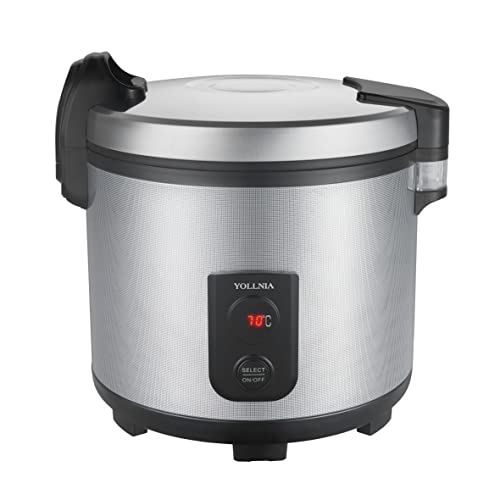
Please be informed that the 200-cup rice cooker is temporarily unavailable. As an alternative, we are pleased to present a comparable model that offers similar capacity and functionality. We trust this option will support you in making the best choice for your requirements.
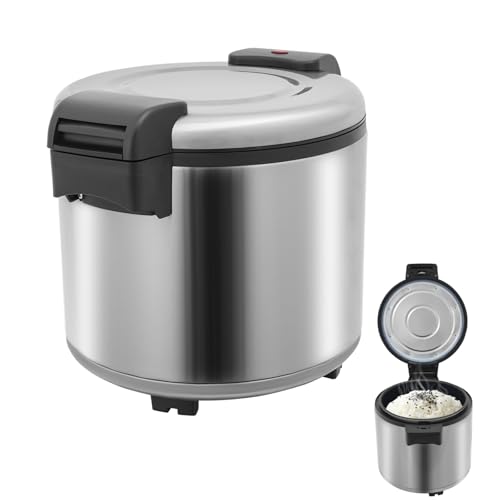
1. 120-Cup Commercial Rice Warmer, Adjustable Temp, Nonstick Pot
Running a buffet line, sushi bar, or banquet service means your rice must stay fresh, safe, and perfectly fluffy from the first plate to the last. If you’re searching for a 120 cup rice cooker electric option for high-volume service, note that this model is a warm-only rice warmer (not a cooker)—ideal when you already cook rice in bulk and need reliable, all-day holding. With a non-stick pot and adjustable temperature control, it delivers consistent texture and quick turnaround between seatings.
At Expert Reviews Best Rice Cooker, we’ve thoroughly researched and compared a wide range of models to bring you honest, in-depth reviews you can trust. This commercial rice warmer is built for restaurants, catering teams, and family events where capacity and simplicity matter. It keeps steamed or sushi rice at serving quality without drying out, reduces waste during peak hours, and integrates seamlessly with existing kitchen workflows that already include a separate 120 cup rice cooker electric unit.
Specifications
120-cup capacity | warm-only (not cooker) | adjustable thermostat | nonstick inner pot | commercial build | buffet/sushi-rice ready
Key Features
- Warm function only—pair with your primary 120 cup rice cooker electric for bulk cooking
- Adjustable temperature dial for safe, consistent serving
- Non-stick, easy-clean inner pot minimizes sticking and waste
- Large 120-cup capacity for restaurants, banquets, and sushi bars
- Sturdy, commercial construction designed for daily service
Pros & Cons
Pros
What are our favorite features?
- Excellent all-day holding for buffet or sushi rice
- Even heat distribution reduces clumping and dryness
- Quick wipe-down non-stick pot saves cleanup time
- Simple controls—low training overhead for staff
- Supports high throughput during peak service
Cons
What could be better?
- Not a cooker—requires separately cooked rice
- Large footprint; needs counter space and dedicated outlet
Why Choose
- Purpose-built warmer for steady service quality and food safety
- Maximizes efficiency when paired with a 120 cup rice cooker electric back-of-house
- Reduces labor—set temperature and focus on plating
- Cuts waste by preventing over-dry, discarded batches
- Scales effortlessly for restaurants, caterers, parties, and family gatherings
2. 110-Cup Commercial Rice Warmer, 20L, Adjustable Temp, Nonstick
Running a sushi bar, cafeteria, or catering line demands rice that stays fluffy, safe, and ready for plating. This CAZACHEF commercial rice warmer holds up to 55 cups raw / 110 cups cooked in a 20L non-stick inner pot and lets you fine-tune holding with a 122–178°F adjustable thermostat and 130W heat. If you’re shopping for a 110 cup rice cooker electric, note this model is a warm-only unit (not a cooker) designed to pair with your primary cooker and keep batches perfect.
Built for portability and restaurant use, durable housing, easy-lift lid, and condensation control help reduce waste and cleanup time. Whether you’re holding sushi rice, jasmine, or pilaf, temperature stability preserves texture during peak rushes. For operators comparing 110 cup rice cooker electric options, this warm-only design simplifies service, and when paired with your back-of-house cooker, it functions as the companion to any 110 cup rice cooker electric workflow.
Specifications
Warm-only | 55 raw/110 cup | 20L | 130W | 122–178°F adjustable | non-stick pot | portable | commercial build
Key Features
- Warm-only design (not a cooker) for reliable all-day holding
- 20L capacity: 55 raw / 110 cooked cups for high-volume service
- 122–178°F adjustable thermostat for precise serving temps
- 130W efficient heating minimizes energy use during holding
- Non-stick inner pot for easy cleaning and reduced waste
Pros & Cons
Pros
What are our favorite features?
- Consistent texture for sushi and buffet service
- Energy-efficient 130W holding performance
- Non-stick pot speeds nightly cleanup
- Simple controls; low training overhead
- Large capacity supports peak rushes
Cons
What could be better?
- Not a cooker—requires pre-cooked rice
- Lower wattage means slower recovery after large refills
Why Choose
- Purpose-built warmer for steady quality and food safety
- Adjustable temperature range to match menu styles
- Big 20L capacity reduces batch turnover
- Non-stick pot cuts waste and cleanup time
- Efficient, portable solution for restaurants, caterers, and events
3. 110-Cup Commercial Rice Warmer, 18.1QT, Adjustable Temp, Nonstick
Running a sushi bar, cafeteria, or banquet line? This portable 18.1QT commercial rice warmer keeps pre-cooked rice fluffy, safe, and ready for plating. If you’re comparing an 110 cup rice cooker electric for high-volume service, note this is a warm-only unit (not a cooker) built to partner with your main cooker. With a non-stick inner pot, 122–178°F adjustable temperature control, and efficient 130W heating, it maintains ideal texture through rushes while reducing waste and cleanup time.
Designed for restaurants, caterers, and family events, the durable housing and easy-lift lid simplify service, and the 55 raw/110 cooked-cup capacity scales effortlessly from lunch to banquet. For teams that already batch-cook rice, this companion to your 110 cup rice cooker electric workflow keeps grains at peak quality without drying. The result: smoother lines, consistent portions, and happier guests—all with a compact footprint that moves wherever the action is.
Specifications
Warm-only | 55 raw/110 cooked cups | 18.1QT | 130W | 122–178°F adjustable | non-stick inner pot | portable
Key Features
- Pairs perfectly with your 110 cup rice cooker electric (warm-only; not a cooker)
- 18.1QT capacity: 55 raw / 110 cooked cups for high-volume service
- 122–178°F adjustable thermostat for precise serving temps
- 130W efficient heating sustains safe, even warmth
- Non-stick inner pot simplifies cleanup and reduces waste
Pros & Cons
Pros
What are our favorite features?
- Consistent, fluffy rice for buffet and sushi service
- Energy-efficient holding with 130W heating
- Non-stick pot speeds nightly cleanup
- Simple controls; minimal staff training
- Portable form factor fits changing layouts
Cons
What could be better?
- Not a cooker—requires pre-cooked rice
- Slower heat recovery after very large refills
Why Choose
- Purpose-built warmer for steady quality and food safety
- Adjustable temperature to match sushi, jasmine, or pilaf styles
- Big capacity reduces batch turnover and waste
- Non-stick interior lowers labor and cleaning time
- Reliable, portable solution for restaurants, caterers, and events
Comparison
| Product (brand) | Type | Capacity (cooked / raw) | Volume | Temp control / range | Power | Inner pot | Notable notes / best for |
| Warm-only (not a cooker) | 120 cups cooked | ~6 gal | Adjustable (listing mentions ~65 °C / 149 °F hold) | ~105 W, 110 V | Non-stick | Budget, large buffets and sushi lines needing all-day holding. | |
| Warm-only (not a cooker) | 110 cups cooked / 55 cups raw | 20 L | 122–178 °F adjustable | 130 W | Non-stick | Portable 20 L warmer with precise dial—great for restaurants/caterers. | |
| Warm-only (not a cooker) | 110 cups cooked / 55 cups raw | 18.1 QT | 122–178 °F adjustable | 130 W | Non-stick | Compact 18.1 QT unit; good when space is tight but capacity demands are high. |
How to Choose the 200 Cup Rice Cooker Electric
Here are the core factors to compare when choosing a 200 cup rice cooker electric:
- True cooked capacity and batch time
- Heating power (wattage) and recovery speed
- Keep-warm performance and safe holding duration
- Thermostat accuracy and HACCP-friendly temperature control
- Inner pot material and thickness (nonstick, hard-anodized, stainless)
- Lid design and condensation/steam management
- Safety features and certifications (ETL/NSF, overheat protection)
- Voltage/plug type (110–120V vs 220–240V) and circuit requirements
- Footprint, weight, and mobility/handles
- Cleaning ease and removable parts/liners
- Controls usability and staff training simplicity
- Durability, warranty length, and parts availability
- Energy consumption and cost per serving
- Included accessories (measuring tools, paddles, liners)
- Brand reliability and service network proximity
- Menu fit (plain rice, sushi/sticky, congee/pilaf) and texture consistency
Frequently Asked Questions (FAQ’s)
Q: Is “200 cups” cooked or uncooked?
A: Check the spec sheet carefully. Some brands label uncooked capacity (which typically yields ~2–2.5× cooked), others label cooked capacity. As a rough guide, 100 cups uncooked ≈ 200–250 cups cooked, depending on rice type and rinse/soak.
Q: How many diners can a 200-cup unit serve?
A: Plan on 220–320 servings per full batch. Portion sizes vary (≈½–¾ cup cooked per plate), buffet mounds use more, bento portions use less.
Q: Typical cook time and hold time?
A: Full batches usually cook in 45–70 minutes (model/wattage dependent). For quality, hold above 60–63 °C (140–145 °F) and aim to serve within 2–6 hours; longer is possible, but texture gradually declines.
Q: What wattage should I look for?
A: Large commercial cookers are often 2–4 kW. Higher wattage shortens cook and recovery times but needs the right circuit. Verify voltage (110–120 V vs 220–240 V) and breaker requirements before purchase.
Q: Nonstick aluminum vs stainless inner pots—what’s best?
A: Nonstick = faster cleanup, less sticking, but needs gentle utensils. Stainless = tougher, tolerates metal paddles, but requires rinsing/soaking and a quick fluff to avoid sticking.
Q: How does a 200 cup rice cooker electric handle sushi rice vs long grain?
A: For sushi rice, rinse thoroughly, soak 20–30 min, and reduce heat exposure after cook; hold around 65–70 °C (149–158 °F) with a damp towel during service passes. Long-grain/basmati usually needs slightly less water and a 5–10 min rest before fluffing.
Q: Single 200-cup vs two 100-cup machines?
A: One 200-cup maximizes space and labor simplicity. Two 100-cup adds redundancy (if one fails, service continues) and staggers batch timing for fresher turnover. Choose based on risk tolerance and service style.
Q: What features really matter at this size?
A: Accurate thermostats, even bottom heating, thick inner pots, condensation management, hinged/latching lids, easy-read controls, and reliable overheat/thermal cutoffs.
Q: How do I avoid top-wet/bottom-dry results?
A: Rinse to remove excess starch, level the rice bed, avoid overfilling beyond rated lines, allow rest/steam-off time after the cook cycle, then fluff and turn to equalize moisture before holding.
Q: HACCP and temperature logging—any tips?
A: Use a calibrated probe to verify ≥60–63 °C in multiple spots (center and edges) and log at intervals. Many kitchens set reminders every 2 hours during service.
Q: Can liners help?
A: Disposable liners speed cleanup but can trap steam. If you use them, pierce to vent, monitor condensation, and never exceed manufacturer guidance.
Q: Do I need a dedicated circuit?
A: Often yes. A 2–4 kW cooker can require a 20–30 A circuit (regional code dependent). Confirm plug type, breaker, and outlet location to avoid extension cords.
Q: What’s the ROI on a 200-cup model?
A: Example: 3 kWh for a full batch at $0.15/kWh ≈ $0.45 electricity per batch. At ~250 servings, that’s ~$0.0018 per serving. If it saves 2 staff-hours/day at $12/hr, that’s $24/day; payback on a $1,500 unit can be ~2–3 months.
Q: Any maintenance rituals to extend lifespan?
A: Daily: rinse pot promptly, avoid metal on nonstick, wipe condensation gutters/lid. Weekly: descaling check, gasket inspection, thermostat surface dust-off (unplugged). Replace worn paddles and gaskets on schedule.
Q: What common buyer mistake should I avoid?
A: Confusing a warmer with a cooker. A 200 cup rice cooker electric cooks and holds; a “rice warmer” only maintains temperature. Verify you’re buying a cooker for batch production—or a warmer if you already cook elsewhere and just need holding.
Q: Should I get a manual or digital control panel?
A: Manual/dial: rugged, easy for new staff, fewer failure points. Digital: precise timing, multi-stage profiles, sometimes better repeatability. Pick based on staff skill and menu complexity.
Q: How does soaking affect throughput?
A: A 20–30 min soak often improves texture and shortens cook time. Build soaking into prep so it doesn’t slow the line; stagger batches if you run continuous service.
Q: Can one unit handle pilaf/biryani styles?
A: Yes, but use sauté/boil-then-steam workflows and avoid overfilling. For biryani, par-cook separately and finish on dum in controlled batches to prevent scorching.
Q: Any tips for service flow at banquets?
A: Start a batch early, rest 10 minutes, fluff, then hold; stage second batch to finish as the first dips to 30–40%. Keep lids closed, rotate from center to edges during plating.
Conclusion
If your goal is true batch cooking, a 200 cup rice cooker electric is what you need—but note that the three links above are warmers (not cookers). Among them, our pick is the CAZACHEF 20 L / 110-cup warmer for its precise 122–178 °F adjustable thermostat and efficient 130 W hold—ideal for sushi bars, buffets, and caterers that already cook rice elsewhere. For maximum holding capacity, the “120-cup” warmer is a solid value, while the 18.1 QT / 110-cup unit shines when counter space is tight.
For kitchens that must both cook and hold at banquet scale, we strongly recommend buying a 200 cup rice cooker electric (or pairing two 100-cup cookers for redundancy) and then using one of the warmers above—preferably the CAZACHEF—to keep service smooth through peak rushes. Look for commercial certifications, thick inner pots, and adequate circuit capacity; then press “buy” with confidence knowing your line will move faster, portions stay consistent, and guest satisfaction climbs.